
Abhyanga: A Daily Practice for Longevity and Calm
Warm oil, steady hands, and the quiet rhythm of breath. Abhyanga, the traditional āyurvedic practice of oiling the body, is more than a massage. It is a conversation between body and consciousness, a way of slowing down enough to listen. The oil softens what has grown rigid, steadies what has become restless, and reminds us that care does not have to be complicated.
I was first introduced to abhyanga more than twenty years ago. Since then, it has become a practice I lean on again and again. The steady rhythm of abhyanga grounds me amid the push and pull of modern life and shields me from the dry, rough climate of the Rocky Mountains where I live. When life feels uncertain, the simple act of oiling the body restores a quiet sense of stability and trust in the unfolding of time.
In the classical texts of āyurveda, abhyanga is described as a daily, self-administered oil massage that nourishes the skin, strengthens the body, and promotes longevity. Yet beyond its physical benefits, abhyanga is a ritual of reverence, a way of honoring the body as the dwelling place of prāṇa, the vital force of life itself. Each stroke becomes an offering, restoring harmony between the senses, the mind, and the self.
Rooted in the Classics
The Caraka Saṃhitā describes oil (sneha) as that which brings softness, stability, strength, and comfort to the body, while pacifying vāta and building resilience. These qualities directly counter the dry, light, rough, and mobile nature of vāta, the doṣa most easily disturbed by modern life. Through this lens, abhyanga is not indulgence but essential maintenance. It continually restores lubrication to the body’s inner pathways, supports ojas (vital essence), and steadies the nervous system.
The Aṣṭāṅga Hṛdayam recommends abhyanga as part of a daily routine performed in the morning before exercise and followed by a bath. When practiced regularly, it helps delay the signs of aging, relieves fatigue, and calms aggravation of vāta. It improves vision, nourishes the bodily tissues, promotes longevity, supports sound sleep, brightens the complexion, and strengthens the body.
Bringing the Practice to Life
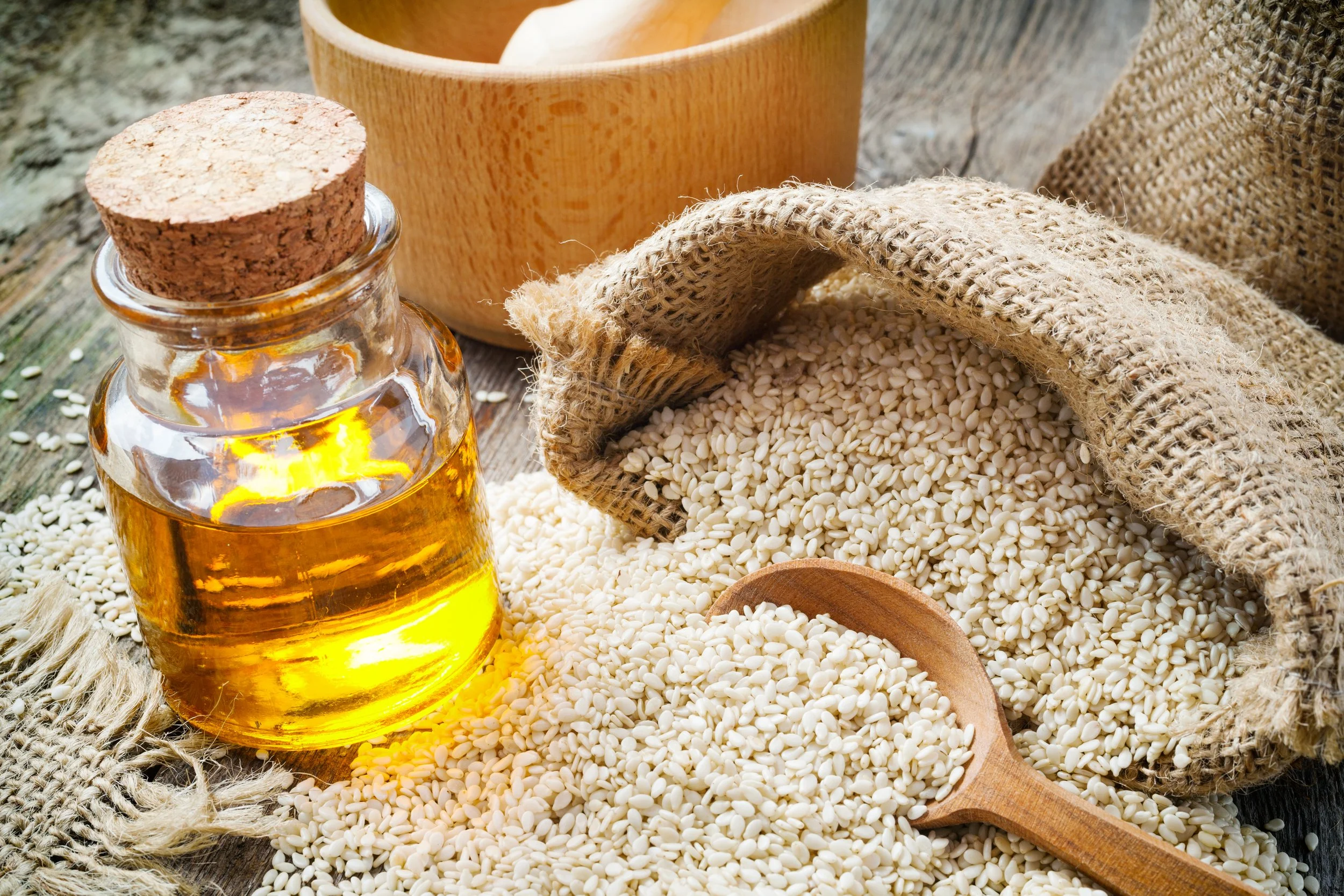
Abhyanga is best practiced in the morning as part of one’s daily routine to maintain health. While a medicated oil may be chosen based on one’s constitution, condition, and environment, it is often best to begin with something simple. Sesame oil, with its warm, nourishing, and gently penetrating qualities, is revered in āyurveda for its ability to pacify vāta and bring steadiness to both body and mind. Coconut oil may feel more comfortable in warmer months or for those prone to excess heat, while mustard oil can be enlivening for those with heavier, cooler, or slower tendencies. Whatever oil you choose, quality matters; look for cold-pressed, organic oils whenever possible.
If you are using sesame oil, it is customary to cure the oil, making it lighter and easier for the body to assimilate. To do this, slowly heat a small amount, such as a pint, to 212°F (100°C). If you do not have a thermometer, add a drop of water; when it sputters, the oil is ready. Store the cured oil in a clean glass bottle and warm a small portion before each use.
When you begin, keep the setting simple and warm, free from drafts or distractions. Pour a small amount of oil into your hands and let the warmth spread before it touches the skin. Move slowly from head to feet, following the natural flow of the body. Use circular motions over the joints and long, steady strokes along the limbs and other long areas of the body. Give special attention to the head, ears, legs, and feet, prioritizing these areas on days when time is short.
After the massage, allow the oil to rest on the skin for a short time so it can be absorbed. This quiet pause lets the warmth and nourishment of the oil reach deeper layers of the body. When ready, bathe or shower in warm water to remove the excess. Use a mild, natural soap only where needed, or simply towel dry to gently remove the surface oil.
Abhyanga is not about doing it perfectly or for a set amount of time. It is about finding rhythm, comfort, and consistency. Let it become an easeful moment of connection, a daily reminder that care begins with listening to what the body truly needs.
When to Refrain
Abhyanga is best avoided during times of indigestion, fever, acute illness, or when there is excess mucus, congestion, or cough. Refrain from abhyanga when kapha is increased, as digestion tends to be slow, and the body may feel heavy, sluggish, or swollen. The oil’s heavy and unctuous qualities can further exacerbate kapha. Abhyanga is not recommended during menses and pregnancy. As always in āyurveda, right timing and awareness of one’s present state are key.
A Return to Reverence
Through the rhythm of oil and touch, abhyanga teaches us to listen to the quiet voice of the body, to the places that ache for warmth, and to the subtle pulse of prāṇa within. It invites us to align with the natural order of things, to move in harmony with time rather than against it. In this daily act of care, we learn to honor the vessel through which life expresses itself.
When practiced with presence, abhyanga becomes more than self-massage; it becomes self-remembrance, a ritual that restores what the world so easily disperses: steadiness, softness, and the feeling of being at home within oneself.
What would change if you began each morning by greeting your body with warmth and attention?
References
Aṣṭāṅga Hṛdayam, Sūtrasthāna 2/8-9
Caraka Saṃhitā, Sūtrasthāna 5/88-92
